
Foodborne illness outbreaks rarely stem from a single failure. More often, they result from a series of lapses across an increasingly complex system of agriculture, processing, and distribution. The recent Cyclospora outbreaks linked to fresh produce serve as a powerful reminder that food safety depends not only on systems and procedures, but also on the people responsible for carrying them out every day.
While regulatory compliance, supplier verification, and preventive controls remain essential, one often overlooked factor can significantly strengthen all of them: workforce training. A strong, consistent training program can better equip workers to identify risks, follow proper procedures, respond to potential contamination events, and contribute to a stronger culture of food safety throughout the organization.
Understanding the Cyclospora Challenge
Cyclospora cayetanensis is a microscopic parasite that causes cyclosporiasis, a gastrointestinal illness characterized by severe diarrhea, fatigue, nausea, loss of appetite, and other symptoms. The parasite can contaminate food or water through human fecal contamination (indicating a failure in human waste management) and has frequently been associated with fresh produce. Many other foodborne illnesses are caused by bacteria and viruses, but as a parasite, cyclospora has a protective form that makes it resistant to disinfectants typically used on fresh produce to kill bacteria and viruses.
Cyclospora can be particularly difficult to detect and trace, complicating outbreak investigations and response efforts. According to the Institute of Food Technologists (IFT), cyclospora investigations are uniquely challenging due the short shelf life of fresh produce combined with the long incubation period, which creates delays between contamination, illness, diagnosis, reporting, and confirmation — a lag that means the fresh produce that was the source is no longer on the shelves.
In 2026, the CDC, FDA, and state health officials investigated a large multistate Cyclospora outbreak linked to iceberg lettuce sourced from central Mexico. Thousands of illnesses were reported, highlighting the significant public health and business consequences that can result from contamination events involving fresh produce.
Outbreaks like these reinforce a broader reality: preventing foodborne illness requires vigilance at every stage of the food supply chain.
Food Safety Programs Are Only as Effective as the People Implementing Them
Most farms and food manufacturers already have food safety plans, sanitation procedures, good agricultural practices (GAPs) or good manufacturing practices (GMPs), and preventive controls in place. However, procedures alone cannot prevent contamination if employees do not fully understand them or consistently follow them.
In 2022, the University of Florida’s Institute of Food and Agricultural Sciences authored a fact sheet for produce growers on preventing cyclospora on the farm. At the core of its recommendations: workforce training. Stating the need for quality training materials in the workers’ native language on health and hygiene principles, proper handwashing, the importance of not working when sick, and more.
Part of the problem is training often occurs during onboarding and then receives limited reinforcement afterward. Over time, employee turnover, changing policies, expanding responsibilities, and production pressures can create knowledge gaps that increase operational risk.
Building Knowledge Beyond Compliance
One of the greatest benefits of modern workforce training is the ability to validate employee understanding and application on the floor and in the field.
Traditional training programs often focus on checking boxes: completing annual courses, documenting participation, and meeting audit requirements. While these goals are important, truly effective training creates understanding and behavior change.
Employees who understand the consequences of contamination are more likely to:
- Follow sanitation procedures correctly.
- Report food safety concerns promptly.
- Recognize potential hazards.
- Understand their role in preventing foodborne illness.
- Take greater ownership of food safety outcomes.
If an organization is not seeing these levels of engagement, it is time to take an inward look at their training program. In a survey of more than 1,200 food industry professionals, those who rated their training program “above average” saw tremendous outcomes, including 12X greater adherence to SOPs and employees that are 5X more likely to identify and report a potential risk to prevent an incident before it occurs.
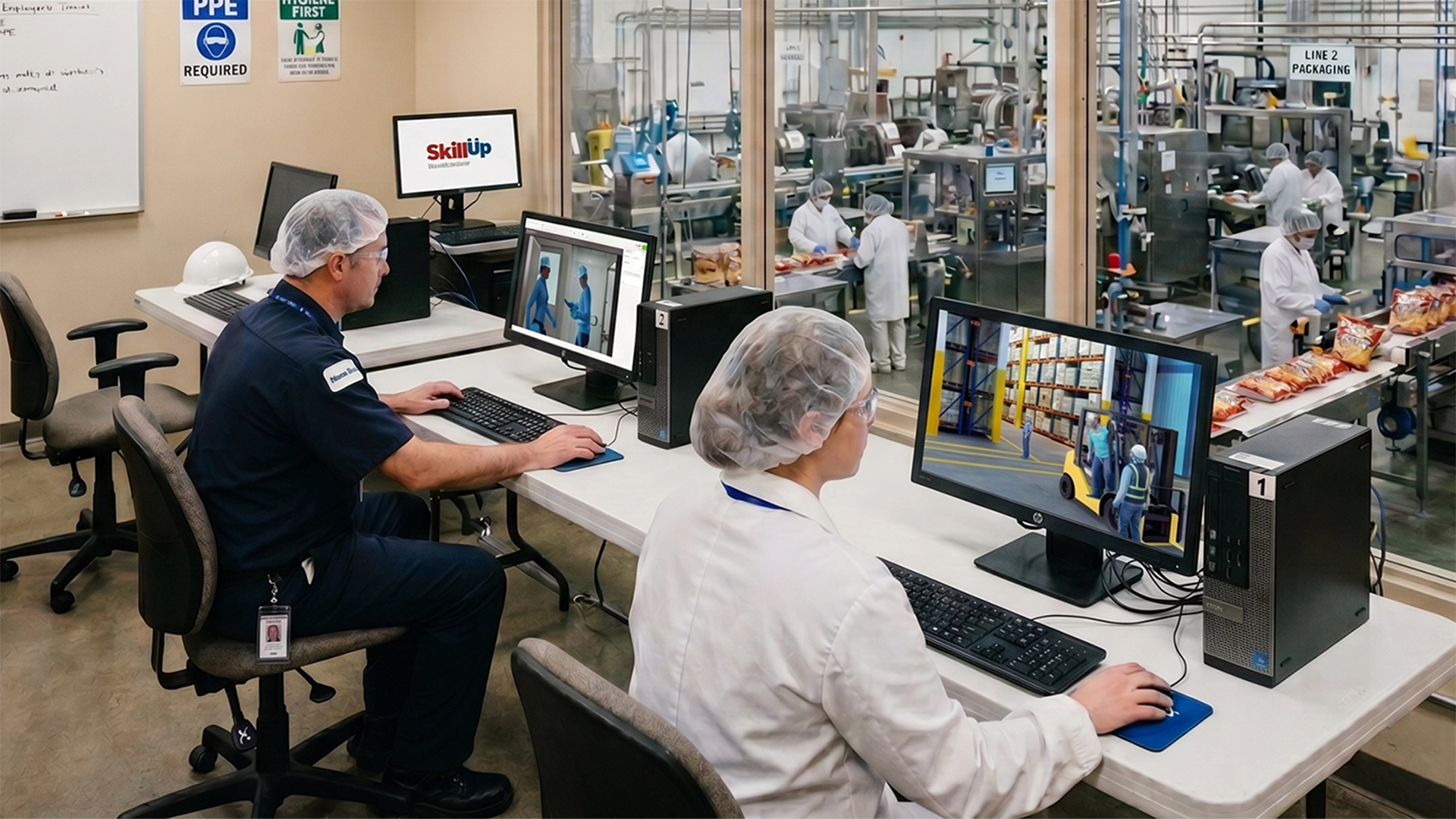
Modern training platforms, such as SkillUp by Registrar Corp, help organizations reach this level of engagement through:
- Short, focused, highly-interactive courses tailor-built for food industry workforces
- Advanced LMS admin capabilities that are easy to use…so they do get used
- Digital development and execution of observation checklists
- Proactive identification of employees needing more training reinforcement
- AI-powered course authoring to transform paper SOPs to eLearning courses in minutes
Strengthening Food Safety Culture
Many food safety professionals agree that culture plays a critical role in preventing incidents.
A strong food safety culture exists when employees at every level consistently prioritize food safety, even under production pressures. Yet culture does not emerge on its own. It must be intentionally developed through leadership, communication, and continuous training.
Regular workforce education reinforces key messages such as:
- Food safety is everyone’s responsibility.
- Concerns should be reported immediately.
- Procedures exist to protect consumers.
- Quality and safety take precedence over speed.
- Continuous improvement is expected.
When these principles are consistently reinforced through training, organizations create an environment where employees feel confident identifying risks before they become serious problems.
Outbreak investigations frequently reveal missed warning signs that occurred before contamination was discovered. A workforce that is educated, observant, and empowered to raise concerns can help organizations detect and address issues much earlier.
Addressing High-Risk Areas More Effectively
Cyclospora outbreaks have brought increased attention to agricultural water quality, sanitation, employee hygiene, supplier controls, and produce handling practices. Food safety experts continue to emphasize that preventive measures must be implemented long before products reach consumers.
Targeted workforce training can help organizations strengthen performance in these critical areas by educating employees on:
Personal Hygiene
Employees must understand proper handwashing procedures, illness reporting requirements, and hygiene expectations to reduce the risk of contamination.
Sanitation and Cleaning
Training helps ensure workers understand cleaning verification procedures, chemical usage requirements, and the importance of thorough sanitation.
Hazard Recognition
Employees who can identify potential contamination risks are more likely to intervene before problems escalate.
Supplier and Receiving Controls
Training strengthens awareness around documentation review, traceability requirements, and incoming material verification.
By reinforcing these competencies regularly, organizations can reduce the likelihood that critical control measures are overlooked. More organizations than ever before rely on training programs built for the food industry, such as SkillUp workforce training platform, that include these training courses and more as part of the base program.
From Reactive to Preventive
The food industry often responds quickly after outbreaks occur. Investigations are launched, recalls are issued, procedures are reviewed, and corrective actions are implemented.
But the ultimate goal is prevention.
Investing in workforce training helps organizations shift from a reactive mindset to a preventive one. Employees become active participants in risk reduction rather than passive followers of procedures.
A properly trained workforce can identify vulnerabilities earlier, respond more effectively, and strengthen the preventive systems.
Conclusion
The recent Cyclospora outbreaks underscore a critical lesson for the food industry: food safety depends on people as much as processes. Even the most comprehensive food safety program can be undermined when employees lack the knowledge, confidence, or awareness needed to execute it effectively.
Investing in workforce training helps organizations shift from a reactive mindset to a preventive one. Employees become active participants in risk reduction rather than passive followers of procedures.
In an industry where a single contamination event can have far-reaching consequences, workforce training is not simply a compliance exercise. It is one of the most practical and effective strategies organizations have for protecting consumers, safeguarding brand reputation, and helping prevent the next foodborne illness outbreak.