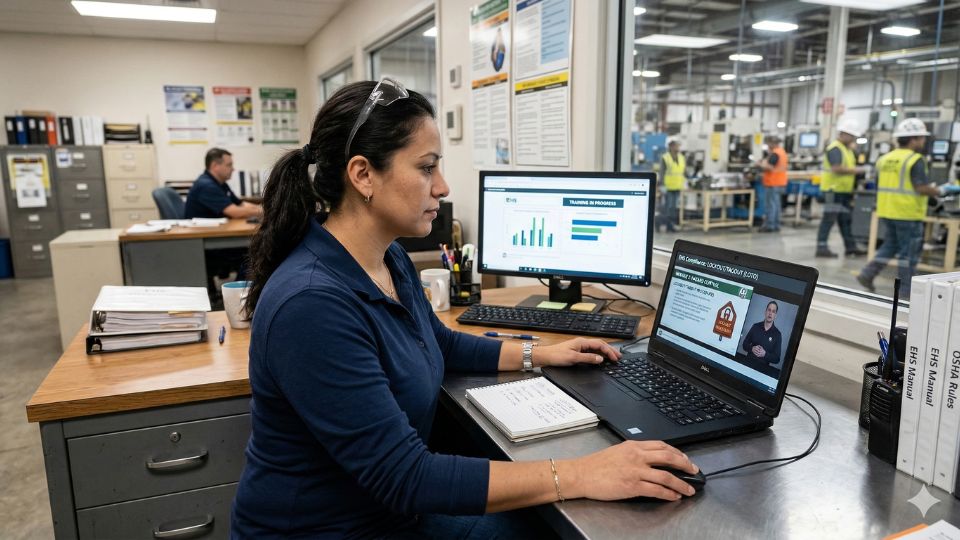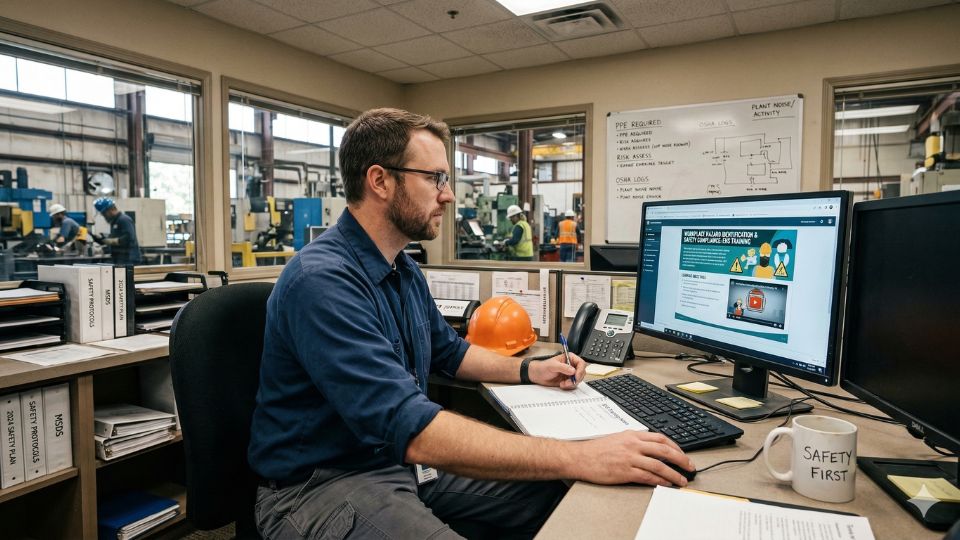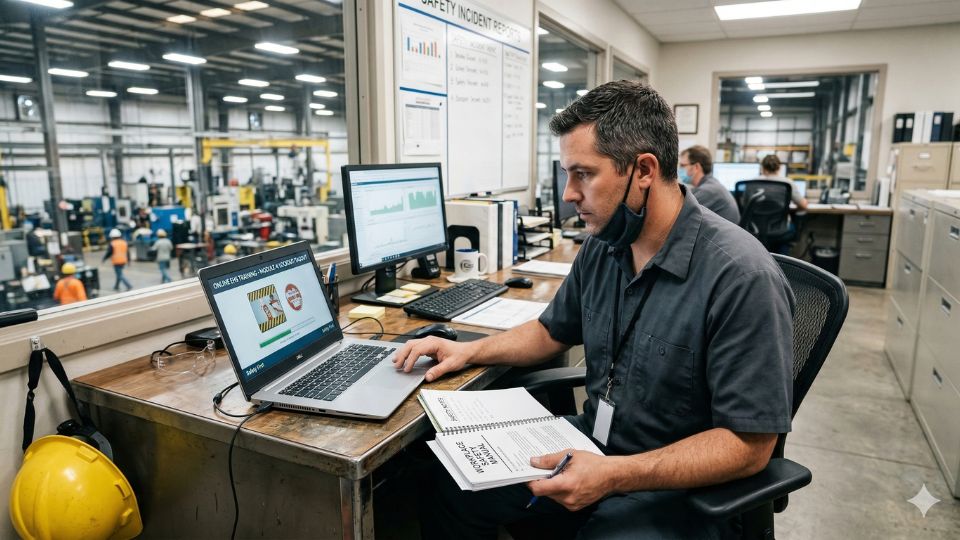
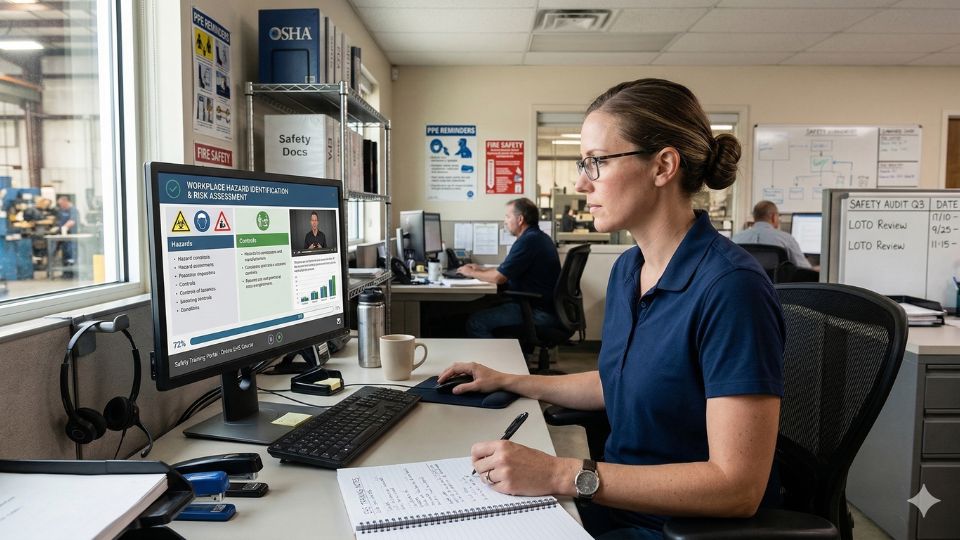
When EHS training is treated as a checkbox, compliance turns into vulnerability. As we enter 2026, the stakes have shifted. With OSHA’s Federal Heat Illness Prevention rule in full enforcement and the final deadlines for GHS Revision 7 Hazard Communication updates upon us, organizations are searching for Workforce Safety Training that does more than just “inform”—it must protect against intensified digital audits and new federal mandates.
The market is crowded with options, but in 2026, the gap between “awareness” and “audit-readiness” has never been wider. This guide compares five leading Environmental Health and Safety (EHS) programs for 2026, revealing what sets each apart and why Registrar Corp remains the gold standard for regulated industries.
1. National Safety Council (NSC) Online Training
The NSC remains a pillar of the safety community, offering extensive brand recognition. Their courses cover foundational topics like ergonomics and general hazard recognition.
- The 2026 Verdict: While excellent for general safety culture, NSC’s broad-spectrum approach often lags behind specific 2026 mandates. For facilities facing high-hazard National Emphasis Programs (NEPs)—such as those in warehousing or chemical manufacturing—the lack of granular, industry-specific technical depth can leave gaps during a specialized OSHA inspection.
2. OSHA Outreach Training (10- and 30-Hour Cards)
The traditional 10- and 30-hour Outreach courses are still the baseline requirement for many construction and general industry roles.
- The 2026 Verdict: These courses provide essential “awareness,” but they are essentially static. In an era of Adaptive Learning, the “one-size-fits-all” Outreach model doesn’t account for the unique machinery or specific chemical risks of a modern plant. Furthermore, Outreach training lacks the built-in refresher tracking required to manage the recurring training cycles mandated by new 2026 standards.
3. Coursera and EdApp Workplace Safety Modules
Digital-first platforms have gained ground by offering high-quality video content and mobile accessibility, making them popular for office-based or hybrid teams needing EHS training.
- The 2026 Verdict: While user-friendly, these platforms prioritize “engagement” over “accountability.” They rarely provide the forensic recordkeeping—such as time-stamped activity logs or specific certificate authentication—that OSHA inspectors now demand during digital audits. They are a fit for introductory learning, but not for sustained, high-stakes compliance.
4. SafetySkills and Vector Solutions
These platforms offer massive libraries and strong HR system integrations. They have pioneered gamification to keep workers interested.
- The 2026 Verdict: These are powerful tools for general eLearning. However, their reliance on generalized modules can be a liability in 2026. With OSHA focusing heavily on “Contextual Accuracy” in industries like food production and pharmaceuticals, generic safety videos often fail to address the specific site-based triggers found in modern EHS management systems.
5. Registrar Corp Workforce Safety Training
Registrar Corp has redefined EHS training by evolving from a “content library” into a “compliance engine.” Developed by subject matter experts with decades of experience in FDA, OSHA, and EPA oversight, this program is built specifically for the 2026 regulatory environment.
Registrar Corp’s SkillUp™ platform bridges the gap between theory and the factory floor. It doesn’t just teach the rules; it teaches the application.
- Audit-Ready Tech: Automated certificate management and refresher scheduling ensure you never miss a 2026 deadline.
- 2026 Regulatory Alignment: Includes fully updated modules for the Federal Heat Illness Prevention Standard and GHS Revision 7 (HazCom) requirements.
- Precision Learning: Uses scenario-based, short-form modules (8–12 minutes) designed for adult learning retention and minimal operational downtime.
How Registrar Measures Up in 2026
| Criteria | Registrar Corp | NSC | OSHA Outreach | Coursera/EdApp | SafetySkills |
| 2026 Reg Alignment | High (Includes Heat/GHS7) | Moderate | Moderate | Low | Moderate |
| Audit-Defense Prep | Advanced (Digital Logs) | Manual | Manual | None | Partial |
| Industry Depth | Comprehensive | General | Limited | Minimal | Moderate |
| AI-Assisted Learning | Yes (Adaptive Paths) | No | No | Partial | Yes |
| Multilingual Support | Yes (20+ Languages) | Limited | Limited | Yes | Yes |
| Satisfaction Guarantee | 100% | None | None | None | None |
What Buyers Must Demand from EHS Training in 2026
The “checkbox” era is over. In 2026, credible Workforce Safety Training must:
- Address the Heat Standard: Provide specific protocols for acclimatization and rest breaks.
- Modernize HazCom: Reflect the new 2026 labels and pictograms required by GHS Revision 7.
- Support Digital Inspections: Offer instant, traceable documentation that can be shared with an inspector in seconds.
- Drive Behavioral Change: Use scenario-based learning to reduce Potential Serious Injuries and Fatalities (PSIFs), not just recordable incidents.
Why Thousands Choose Registrar Corp
Professionals choose Registrar Corp because it removes the “fear factor” of an audit. With over 30,000 clients globally, Registrar provides more than just EHS training; it provides compliance insurance. By integrating directly into your internal systems, Registrar ensures your safety data is traceable, defensible, and decision-ready.
Lead your industry in 2026. Don’t just pass the audit—master it.
Ready to protect your workforce? Enroll today in Registrar Corp’s Workforce Safety Training.